Secured Creditors vs Borrowers: Section 14 CMM Orders and Remedies under the SARFAESI Act
Author & Analysis
Chambers Research Desk
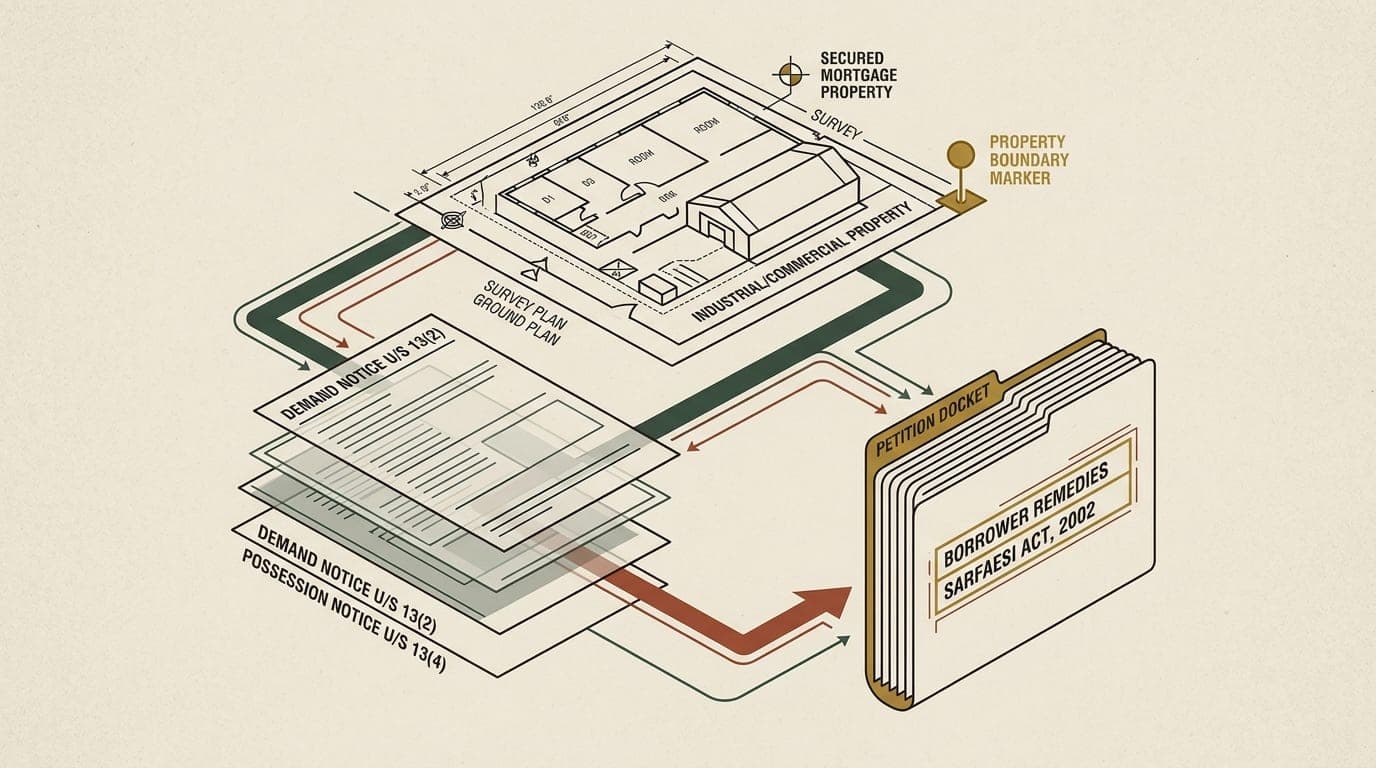
Executive Summary
A practical guide to borrower remedies before the Debt Recovery Tribunal when banks seek physical possession of mortgaged immovable assets.
Key Takeaways
- Section 14 Magistrate orders are purely ministerial and cannot adjudicate debt correctness.
- Borrower’s exclusive statutory forum is Section 17 before the Debt Recovery Tribunal.
- Flaws in Section 13(3A) objection disposal or 30-day auction notices provide solid stay grounds.
The Securitisation and Reconstruction of Financial Assets and Enforcement of Security Interest Act, 2002 (SARFAESI Act) equips secured lenders with extraordinary non-adjudicatory recovery mechanisms. When a borrower defaults and an account is classified as a Non-Performing Asset (NPA), banks issue a 60-day demand notice under Section 13(2).
If unpaid, banks take symbolic possession under Section 13(4) and subsequently petition the Chief Metropolitan Magistrate (CMM) or District Magistrate (DM) under Section 14 to obtain physical possession through court-appointed advocate commissioners.
1. Ministerial Role of the Magistrate under Section 14
In Balkrishna Rama Tarle v. Phoenix ARC, the Supreme Court clarified that the Magistrate’s role under Section 14 is non-adjudicatory and administrative. The CMM/DM is only required to verify the 9-point affidavit submitted by the authorized officer of the bank confirming compliance with statutory notices. The Magistrate cannot adjudicate disputes regarding the quantum of debt or fraud.
2. Jurisdiction of the Debt Recovery Tribunal (DRT)
Because the Magistrate cannot adjudicate the validity of the bank’s actions, the aggrieved borrower or bona fide tenant’s sole statutory remedy lies before the Debt Recovery Tribunal under Section 17 of the SARFAESI Act:
- •**Limitation**: The Securitization Application (SA) must be filed within 45 days from the date on which physical or symbolic measures are taken.
- •**Interim Injunction**: The DRT possesses plenary authority to stay physical eviction, restrain public auction, and restore possession if the bank committed procedural violations of Security Interest (Enforcement) Rules.
3. Common Procedural Grounds to Stay SARFAESI Auctions
- 1.Non-consideration or arbitrary rejection of borrower objections submitted under Section 13(3A).
- 2.Failure to provide a mandatory 30-day individual sale notice prior to public e-auction.
- 3.Lack of proper valuation from an approved valuer resulting in distress pricing of prime commercial properties.
Matter-Specific Strategy & Appellate Briefing
Discuss the legal ramifications of this jurisprudence for your specific case with Advocate Virendra Kumar under attorney-client privilege.
Related Legal Analysis
Anticipatory Bail under the Bharatiya Nagarik Suraksha Sanhita (BNSS): Procedural Shifts & Judicial Safeguards
A comprehensive comparative analysis of pre-arrest bail protections under Section 482 of the Bharatiya Nagarik Suraksha Sanhita, 2023 versus the erstwhile Section 438 CrPC.
Statutory Presumptions & Trial Defenses in Cheque Bounce Cases under Section 138 NI Act
How defendants can effectively rebut the statutory presumptions under Sections 118 and 139 of the Negotiable Instruments Act to secure acquittal in dishonour trials.